

Background
As electricity demand continues to grow across Great Britain, so too does the challenge of energy security—creating the need for flexible capacity that can maintain grid stability and respond to peak demand. Such flexible capacity is particularly important during dunkelflauten, when there is no wind and sun; in extreme weather conditions, such as during a cold snap or during an overall power outage.
Forsa Energy, which works across the product life cycle—developing, financing, constructing, and operating power generation assets—sought to add additional reliable, fast-start reserve power to its generation portfolio. Such facilities play a crucial role in quickly stabilizing Great Britain’s electricity supply during peak times while supporting the integration of intermittent renewable sources like wind and solar. These peaking plants help advance the energy transition, as flexible generation can complement renewable generation more efficiently than base load Combined Cycle Gas Turbines (CCGT).
Peaking power meets high demand
To achieve this, Forsa Energy contracted with INNIO Group’s authorized Jenbacher distributor Clarke Energy to deliver a full turnkey solution capable of providing peaking power generation for Great Britain, bolstering the stability and security through the Capacity Market. Forsa Energy has worked with Clarke Energy in the past, delivering several hundred MW of peaking power generation projects in Great Britain with Jenbacher engines.
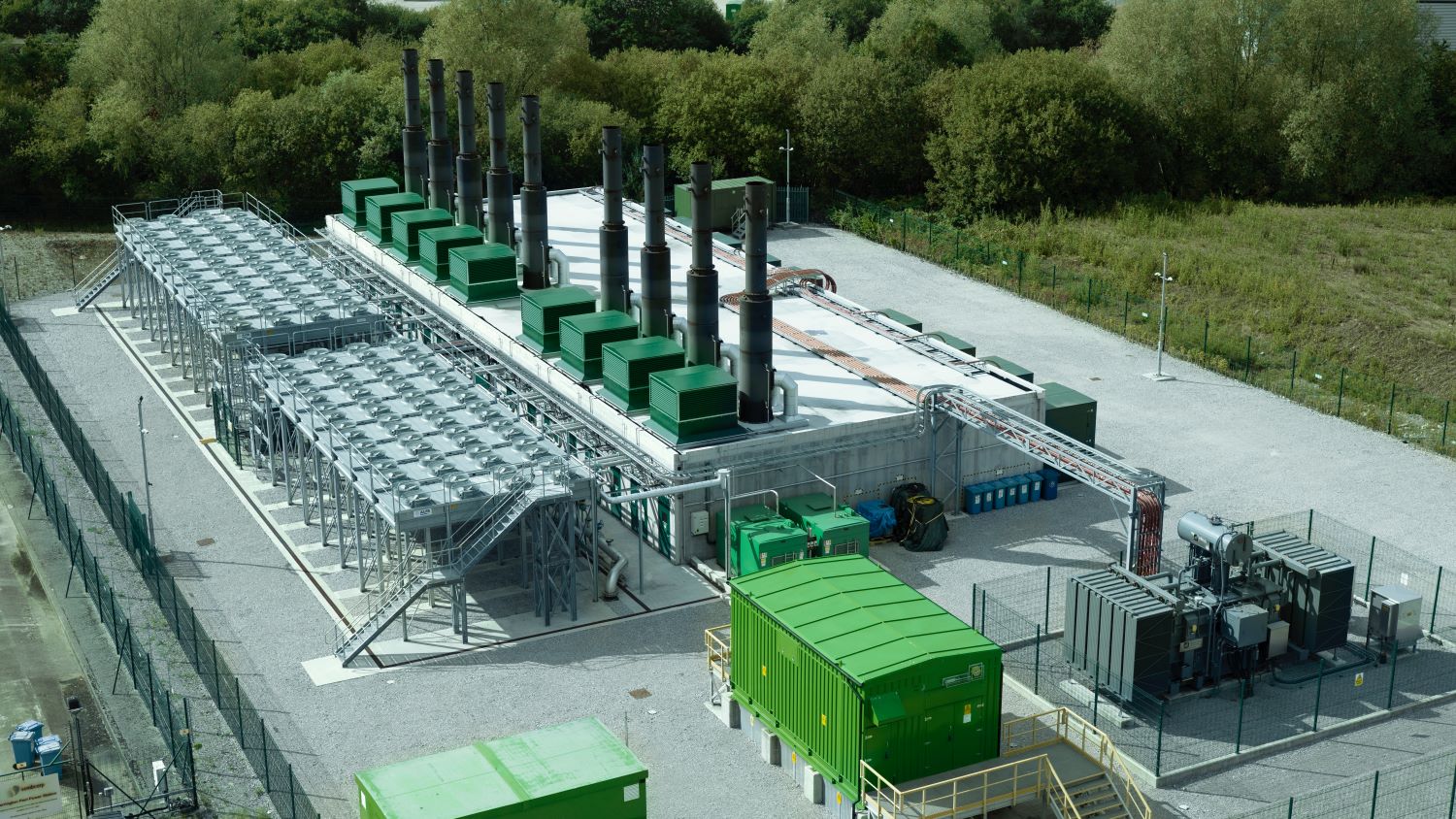
Commissioned in November 2023 at the Carrington Peaking Plant, nine of INNIO’s 4.5 MW Jenbacher engines running on natural gas provide fast, flexible power to the Electricity North West Limited (ENWL) network during periods of high demand. Each unit can ramp up to full capacity in just five minutes.
The plant is located near the villages of Carrington and Partington in the Greater Manchester area. In 2019, Forsa’s peaking plant at Carrington was awarded a Capacity Market contract by National Grid ESO, now National Energy System Operator (NESO), to contribute to Great Britain’s primary mechanism for a stable and secure supply of electricity.
Results
The nine J624 engines at the Carrington Peaking Plant feature advanced two-stage turbocharging, which enhances electrical efficiency while maintaining operational flexibility. With its fast-ramp capability, the plant delivers fast, flexible, and dependable power during peak demand periods, or when wind and solar generation is low, supporting grid stability and reducing the risk of shortages or blackouts. The robust design of the Jenbacher engines allows for high availability and reliable performance.
To meet stringent noise requirements, the plant is built within a specially designed, low-noise concrete enclosure. Other acoustic control measures include silencers for components such as gas exhausts, ventilation fans, and air inlets, as well as detailed acoustic engineering beyond the primary power generation equipment to help ensure compliance with local noise targets.
The unmanned site is fully automated with remote monitoring. Clarke Energy also provided a five-year maintenance agreement to help ensure continued performance and reliability.
This advanced generation facility not only strengthens reliability during peak demand but also supports the integration of renewable energy sources into the national grid, paving the way for Great Britain’s transition toward a cleaner, more sustainable energy future.
Customer benefits
- Fast, flexible power from the nine Jenbacher engines, which can ramp up to their full 40.5 MW capacity in as little as five minutes
- Ability to rapidly meet sudden surges in demand or compensate when renewable generation is low with reliable power
- Comprehensive acoustic design for noise mitigation that helps ensure compliance with stringent local noise regulations while decreasing the plant’s impact on nearby communities
- Full automation with continuous monitoring and remote control, reducing staffing requirements and lowering operational overhead
- Higher electrical efficiency with advanced two-stage turbocharging, reducing fuel consumption and operational costs
- Improved grid stability in support of the NESO Capacity Market contract
- Increased support for renewables’ variability—and the energy transition—with the plant’s fast-start, flexible generation
Media
Location
Installed engines
Electrical output
Commissioned